Run a finger across an unsealed cast gypsum tray and it comes away white. Most makers treat that as a finishing detail. It is the material telling you it is still shedding: gypsum that has set but never been sealed keeps releasing powder from its surface, and every cloth, fingernail and shipping box pulls more of it loose.
A dust-sealing sealer fixes that in an afternoon. The difficult part is that the same film which stops the chalk can also make a matte cast look like plastic, yellow a pale one, or peel away in sheets — usually because of timing, not the product.
Why cast gypsum dusts at all
Gypsum sets by hydration: powder plus water grows a crystal matrix, and that matrix is not solid. It is a sponge. Two things remain once the piece dries. Unreacted particles that never fully wetted sit loose at the surface. And pores — millions of them, left where excess water evaporated — open straight into the body of the cast.
Both are soft. Rub them and they crumble into dust. Stand a wet glass on them and the water goes in, not across.
Sealing does two jobs at once: it binds the loose surface particles into the film, and it closes the pores so liquid stays on top. A sealer is not a shine you add at the end. It is what turns a chalky blank into an object you can use.
Water-based or solvent-based?
Both are polyurethane, and they fail in different ways. For decorative interiors the choice is not close.
| Water-based | Solvent-based | |
|---|---|---|
| Touch dry | 20–30 minutes | 30–60 minutes |
| Hard enough to use | 24 hours | 48 hours |
| Colour drift | None — stays clear | Ambers over a season |
| Finish | Satin or matte; keeps surface texture | Glossier; film builds faster |
| Workspace | Low odour, fine indoors | Strong solvent smell, ventilate hard |
| Cleanup | Water | Mineral spirits |
| Best for | Pale and coloured casts, indoor pieces | Darker casts, pieces near exterior use |
On a white or pastel cast, water-based is the only one worth risking. Solvent-based polyurethane keeps developing a warm amber tone, and over one season a pale tray becomes a slightly beige tray.
What you need
- Water-based polyurethane sealer, matte or satin — not gloss
- A soft brush, 25–40 mm, or a short-nap roller for flat trays
- A soft dusting brush and a lint-free cloth
- Two containers: one for the mist coat, one for full-strength coats
- Two offcuts to raise the piece off the bench
Five steps that decide the result
- Cure before you seal. 24–48 hours at room temperature after demoulding. A cast that still feels cool and damp is holding water; seal it now and that water sits under the film, which goes soft and streaky within a week.
- Take off the dust, not the surface. Soft brush first, then a barely damp lint-free cloth. A wet rag re-wets the skin and raises fibres that read as roughness under the film.
- Mist coat first. Thin the first coat as the label directs — on porous plaster that is often one part water to one part sealer. A thinned coat soaks in and locks the surface; a full-strength first coat sits on top of loose particles and lifts them into the film.
- Two thin coats beat one thick one. 20–30 minutes apart, while the first is still slightly tacky. Thick single coats trap solvent, blush in humidity and keep every brush mark.
- Let it harden, then use it. 24 hours before anything wet touches it, 72 before heavy use. The film is touch-dry long before it is cured — most complaints that "the sealer came off" are really "the sealer was used too soon."
How finishes fail
- Blushing — milky patches. Humidity, or a cold workpiece. Seal above 15 °C and under 70% relative humidity.
- Lap marks — visible overlap lines where a wet edge dried before the next pass. Work in one direction and never stop mid-panel.
- Sealed too early — a soft, rubbery film that never hardens. The cast was still wet inside.
- Silicone contamination — fisheyes and bare patches. Mould-release residue rejects the film. Wash with warm water and a drop of dish soap, dry completely, then seal.
- Over-thick film — a plastic look on a matte cast, and cracking at the edges within months.
When not to seal
Outdoors, sealing improves water resistance but does not make gypsum frost-proof. A sealed cast left out through a freezing winter will still spall. Keep cast pieces indoors or under cover.
For food contact, do not rely on a decorative sealer. Cured polyurethane films are not certified food-safe — use a plate, not the tray, for anything you eat.
Frequently asked
Does sealing make gypsum waterproof?
Water-resistant, not waterproof. A sealed tray handles spills, condensation and a quick rinse. It will not survive being left full of water, and it should never go in a dishwasher.
Can I seal a coloured cast?
Yes — and water-based is the safer choice, because solvent-based polyurethane develops an amber cast that shifts pale pigments within a season. Test on the underside first.
How long does a sealer last?
Two to five years indoors, depending on handling. Recoat when water stops beading on the surface; that is the film telling you the pores are open again.
Doing it on a real piece
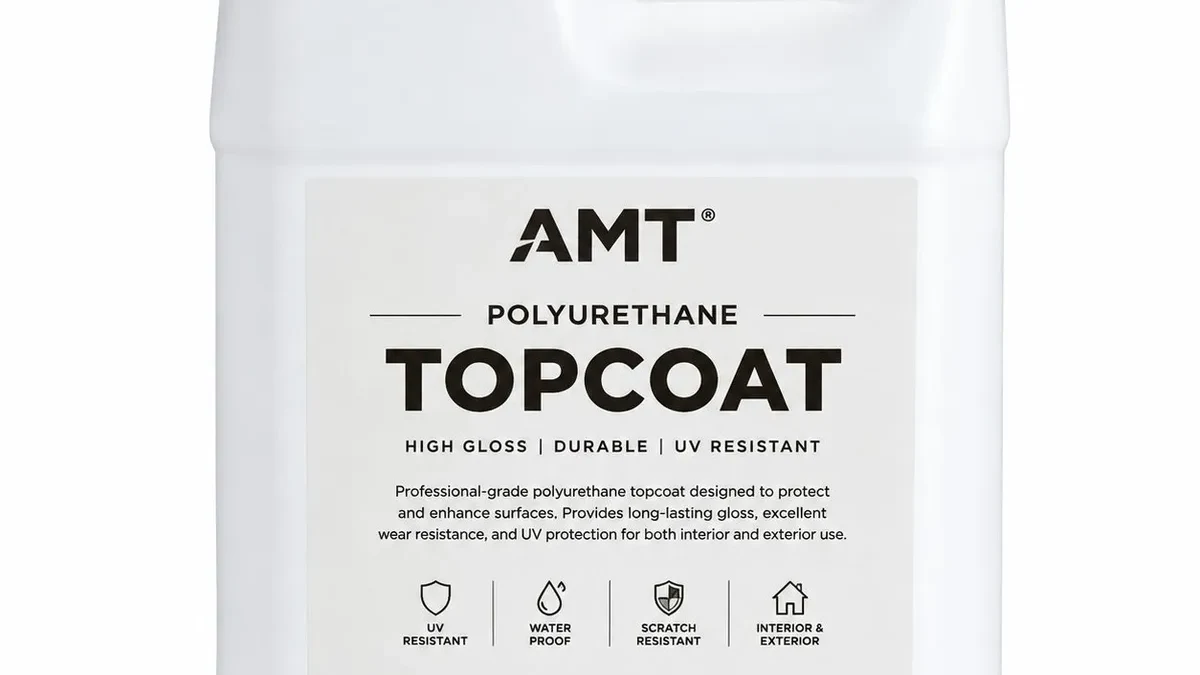
The sealer finishing tutorial walks these five steps on a crushed-stone tray, including the mist-coat ratio and what the surface should feel like between coats. If you are starting from raw material rather than a finished cast, the sealer system page shows where the topcoat sits in the build order, and the 946 ml can covers several trays and a dozen coasters at three coats.